
Understanding Motor Power: How Wattage Affects Performance
Welcome to this information article on Electric Bike Motor Power and Placement. Motor power, measured in watts (W), is a crucial factor in determining the performance of an electric bike (e-bike). The wattage of an e-bike motor directly affects its speed, acceleration, and ability to tackle various terrains.
Low-powered motors (250W) are commonly found in commuter and city bikes. They provide sufficient assistance for flat terrains and moderate inclines, making them ideal for urban environments and casual riding. These motors offer a balance between performance and battery efficiency, ensuring a reasonable range per charge.
Mid-range motors (350W to 500W) deliver more power, making them suitable for hilly areas and longer commutes. They offer better acceleration and can handle steeper inclines with ease. These motors are versatile and cater to a wide range of riding styles, providing a noticeable boost in performance compared to lower-wattage options.
High-powered motors (750W and above) are typically used in mountain e-bikes and cargo bikes. They offer substantial power for off-road adventures, heavy loads, and challenging terrains. These motors provide rapid acceleration and can maintain higher speeds, but they consume more battery power, reducing the overall range.
Choosing the right motor power depends on your riding needs and preferences. Understanding how wattage affects performance helps you select an e-bike that offers the optimal balance of power, efficiency, and range for your specific requirements.

Front Hub Motors: Pros and Cons of Front-Wheel Drive
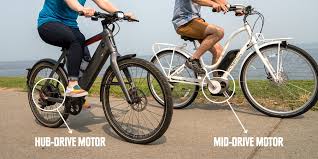
Front hub motors, where the motor is integrated into the front wheel, are a popular choice for many electric bike (e-bike) designs due to their simplicity and ease of installation. Here are the pros and cons of front-wheel drive e-bikes:
Pros:
- Ease of Installation: Front hub motors are relatively easy to install or retrofit onto existing bikes, making them an accessible option for DIY enthusiasts.
- Cost-Effective: These motors tend to be more affordable compared to mid-drive or rear hub motors, making them a budget-friendly choice for those entering the e-bike market.
- Balanced Weight Distribution: With the motor in the front and the battery usually located towards the rear or center, front hub motors can help achieve a balanced weight distribution, improving overall bike stability.
- Simplified Maintenance: Front hub motors typically have fewer components interacting with the drivetrain, which can simplify maintenance and reduce wear on other parts of the bike.
Cons:
- Traction Issues: Front-wheel drive can lead to traction problems, especially on loose or slippery surfaces. This setup is less effective in maintaining grip compared to rear or mid-drive motors.
- Steering Impact: The added weight in the front wheel can affect steering dynamics, making the bike feel heavier and slightly harder to maneuver, particularly at lower speeds.
- Limited Power: Front hub motors are generally less powerful than their mid-drive or rear hub counterparts, which can limit performance on steep inclines and rugged terrain.
- Handling Challenges: Under heavy acceleration or in challenging conditions, the front wheel can spin out, impacting control and handling, which might be a concern for more aggressive riders.
While front hub motors offer a practical and economical solution for many riders, considering the specific riding conditions and personal preferences is essential to make the best choice.

Rear Hub Motors: Enhancing Traction and Stability
Rear hub motors, where the motor is integrated into the rear wheel, are favored for their ability to enhance traction and stability. This setup offers several benefits, particularly in terms of ride quality and performance.
Enhanced Traction: Rear hub motors provide better traction compared to front hub motors. The weight of the rider is naturally concentrated over the rear wheel, which helps maintain contact with the ground. This is especially beneficial when climbing hills or riding on loose or slippery surfaces, as it reduces the likelihood of wheel spin and improves control.
Improved Stability: Placing the motor in the rear wheel lowers the bike’s center of gravity, contributing to a more stable and balanced ride. This stability is particularly noticeable during acceleration and deceleration, making rear hub motors ideal for riders who need consistent, reliable performance in various conditions.
Powerful Performance: Rear hub motors are often more powerful than front hub motors, providing stronger acceleration and the ability to handle steeper inclines. This makes them suitable for a wider range of applications, from urban commuting to off-road adventures.
Less Impact on Steering: With the motor positioned at the back, the front wheel remains lighter and more agile, preserving the bike’s natural steering feel. This results in more intuitive handling and a better overall riding experience.
While rear hub motors enhance traction and stability, they can add weight to the rear of the bike and complicate rear-wheel maintenance. Despite these considerations, rear hub motors are a popular choice for those seeking a balanced, powerful, and reliable e-bike.

Mid-Drive Motors: Balanced Power and Efficiency
Mid-drive motors, positioned at the bike’s crankset, are renowned for their balanced power and efficiency. This placement directly integrates the motor with the bike’s drivetrain, providing several notable advantages.
Balanced Weight Distribution: Placing the motor centrally, near the bike’s bottom bracket, ensures even weight distribution. This enhances the bike’s overall balance and handling, making it feel more natural and stable, especially during climbs and technical rides.
Efficient Power Transfer: Mid-drive motors drive the crankset instead of the wheel, allowing the bike to leverage the gears of the drivetrain. This results in more efficient power usage, enabling the motor to perform optimally across a range of speeds and terrains. Riders can tackle steep inclines with ease by shifting to lower gears, maximizing the motor’s torque.
Improved Performance on Hills: The ability to use the bike’s existing gears allows mid-drive motors to deliver exceptional climbing power. This makes them ideal for hilly and mountainous terrains, where maintaining momentum and control is crucial.
Better Battery Efficiency: The efficient power transfer and ability to use the bike’s gears mean mid-drive motors generally consume less battery power compared to hub motors. This can extend the range of the e-bike, allowing for longer rides between charges.
Maintenance Considerations: Mid-drive motors can be more complex and require more maintenance due to their integration with the bike’s drivetrain. However, the benefits in performance and efficiency often outweigh these concerns for serious riders.
Overall, mid-drive motors offer a superior riding experience through balanced power delivery and efficiency, making them a preferred choice for a wide range of e-bike applications.

Choosing the Right Motor Placement: Factors to Consider
Choosing the right motor placement for your electric bike (e-bike) involves several factors that can significantly affect your riding experience. Here are the key considerations:
Riding Terrain: For urban commuting and flat terrains, front hub motors offer simplicity and cost-effectiveness. Rear hub motors provide better traction and stability on mixed terrain, making them suitable for more varied conditions. Mid-drive motors excel in hilly and off-road environments due to their efficient power transfer and superior climbing ability.
Handling and Stability: Front hub motors can impact steering dynamics, making the bike feel heavier at the front. Rear hub motors enhance rear traction and maintain a natural steering feel. Mid-drive motors offer the best balance, with central weight distribution that improves overall bike stability and handling.
Power and Performance: Mid-drive motors generally deliver better performance due to their ability to use the bike’s gears. They are ideal for riders seeking strong acceleration and efficient power use across different speeds. Rear hub motors also provide strong performance but can be heavier and affect rear handling. Front hub motors, while less powerful, are sufficient for casual riders on flat surfaces.
Maintenance and Repairs: Front and rear hub motors are simpler and easier to install or replace, making them more straightforward for maintenance. Mid-drive motors, integrated with the bike’s drivetrain, may require more frequent and complex maintenance but offer higher efficiency and better performance.
Cost: Front hub motors are typically the most affordable, followed by rear hub motors. Mid-drive motors are generally the most expensive due to their advanced technology and superior performance.
By considering these factors—terrain, handling, performance, maintenance, and cost—you can choose the motor placement that best aligns with your riding needs and preferences, ensuring a satisfying e-bike experience.
Thank you for reading this information article on Electric Bike Motor Power and Placement, I hope you found it helpful.
For more information on Electric Bike, please go here! To find a Electric Bike for purchase,go here!